


 Language: English












Solutions
Horse Construction offers full range of structural strengthening materials with technical supports, documentation supports, products supports, project supports.
No
Can You Apply Carbon Fiber Over an Active Crack?
No. Bonding CFRP over an active crack is one of the most common — and most expensive — mistakes in concrete strengthening. The reinforcement will not reach its design strength, it may debond or rupture without warning, and it will not stop the crack.
The reason is structural, not a matter of workmanship or product quality: CFRP is a passive system that works only through strain transfer from the concrete beneath it. An active crack breaks that premise. Every millimeter the crack opens is strain the fabric spends following the crack instead of resisting load.
Why CFRP Fails on a Moving Crack
1. The strain budget is consumed by the crack
A bonded FRP system develops force only as the substrate strains beneath it. On a stable member, strain is distributed over the whole bonded length. On an active crack, a large part of the fabric's usable strain is spent accommodating the crack opening itself — leaving little or nothing to carry the design load. The system is installed, looks complete, and delivers a fraction of its calculated contribution.
2. Strain concentrates at the crack line
Directly over an opening crack, the fabric must bridge a discontinuity. Local fiber strain at the crack can be many times the average strain in the sheet, and it is at that line — not at the ends of the wrap — that debonding initiates or fibers rupture. Carbon fiber fails in a brittle manner: there is no yielding, no visible warning, no redistribution. The wrap tears where the crack is.
3. The bond line is fatigue-loaded every day
An active crack opens and closes with every load cycle, every temperature swing, and every season. Each cycle works the adhesive interface. Bonded joints are not designed to be cyclically peeled at a discrete line; over time the interface degrades from the crack outward, and the repair detaches from the member it was supposed to strengthen.
4. It treats the symptom, not the cause
An active crack is a message, not a fault in itself. Behind it sits one of a handful of causes: corroding reinforcement pushing the cover off, foundation settlement, overloading, restrained shrinkage, thermal movement, or alkali–silica reaction. Bond carbon fiber over the crack and the cause keeps working underneath — the crack keeps widening, and eventually it tears the wrap apart. The wrap was never in the load path; it was in the way.
Is the Crack Active or Dormant?
Before any material decision, establish whether the crack is still moving.
Map and measure. Record crack locations, orientations, and widths; install crack width gauges or tell-tales at the widest points.
Monitor over time. Watch for at least several weeks — and across a temperature cycle if possible. A crack that widens and narrows with the season is active even if it looks calm on inspection day.
Read the pattern. Cracks that follow the reinforcement line usually indicate corrosion. Diagonal cracks extending across multiple floors suggest settlement or shear distress. Fine, regular map cracking often points to shrinkage or material distress. The pattern tells you which treatment path applies.
A crack whose width is stable over a representative monitoring period can be treated as dormant and repaired. A crack that is still moving cannot be wrapped — it must be dealt with at its source.
Match the Treatment to the Cause
| Cause | What must be done first |
|---|---|
| Corrosion of reinforcement | Remove cover over affected bars, clean and treat the steel, reinstate the section, restore passivation — then strengthen |
| Foundation settlement | Geotechnical assessment and, if required, foundation intervention — the crack will not stop before the ground does |
| Insufficient capacity / overload | Structural assessment; design the strengthening for the actual deficiency, with cracks injected before wrapping |
| Restrained shrinkage or thermal movement | Usually stabilizes with time; inject and protect |
| Alkali–silica reaction | Specialist assessment — an ongoing chemical mechanism cannot be sealed away |
The Correct Sequence
Diagnose. Establish the cause and confirm the crack is dormant.
Eliminate or control the cause. Repair corrosion, address settlement, remove the overload.
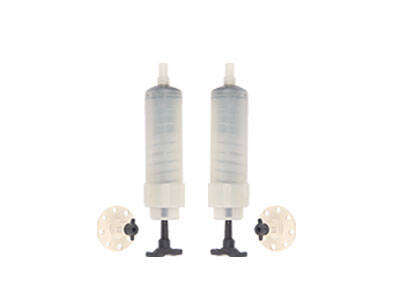
Inject the crack. Pressure-inject epoxy resin to restore continuity across the crack — restoring monolithic action and a sound substrate for bonding. A properly injected crack transfers stress again; this is what makes subsequent strengthening meaningful.
Prepare the surface. Per standard FRP practice — sound, clean, profiled concrete, with corners rounded where fabric wraps.
Apply the CFRP system as designed for the member's actual deficiency — flexure, shear, or confinement.
When the Crack Cannot Be Stabilized
There are situations where the movement cannot be stopped — a structure that cannot be unloaded, a joint that must accommodate thermal movement, a heritage building where intervention is constrained. In these cases:
Do not rigidly inject a moving joint. Use a flexible sealant designed for movement, and keep monitoring it.
If strengthening is still required, the design must explicitly account for crack bridging, and the fiber choice matters: carbon fiber has a low ultimate strain and is a poor crack-bridging material compared with aramid or glass fiber, which tolerate far more deformation. Carbon is the right choice for stiffness and strength; it is not the right choice for chasing a moving crack.
Be honest about the limit. A confinement jacket can restrain and protect a member with a moving crack, but no FRP system can promise to "hold" a crack that is being driven open by an unresolved cause.
Common Mistakes to Avoid
| Mistake | Consequence |
|---|---|
| Wrapping directly over a crack without diagnosis | Wrap delivers a fraction of design capacity; crack continues underneath |
| Injecting a live joint with rigid epoxy | The repair itself becomes the next crack |
| Treating a corrosion crack without removing the corrosion | Rust keeps expanding; the patch and the wrap both fail |
| Assuming CFRP "stops" the crack | It restrains; it does not cure. The cause always wins |
| Ignoring seasonal movement | A wrap that is fine in winter can be torn by summer |
You can find anything here you are in need of, have a trust trying on these products, you will find the big difference after that.

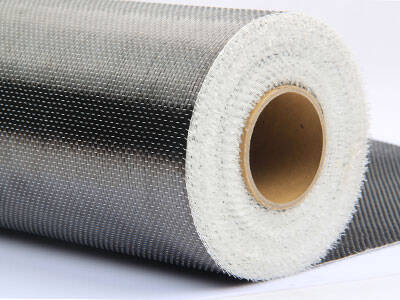
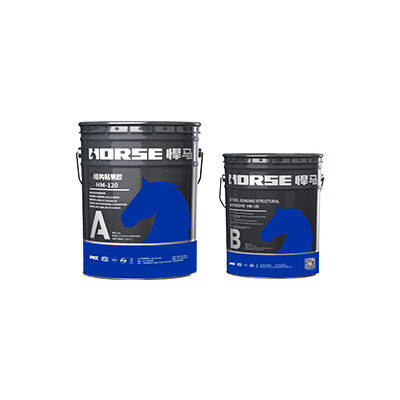
High strength, unidirectional carbon fiber wrap pre-saturated to form a carbon fiber reinforced polymer (CFRP) wrap used to strengthen structural concrete elements.

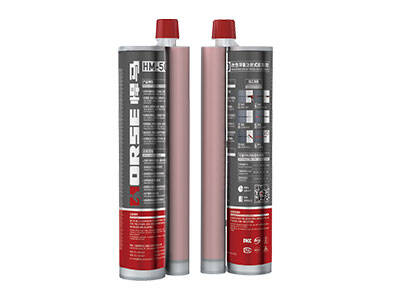
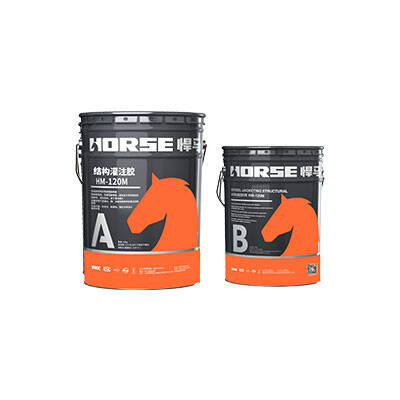
High strength crack sealing repairing adhesive for the fracture surface of concrete crack

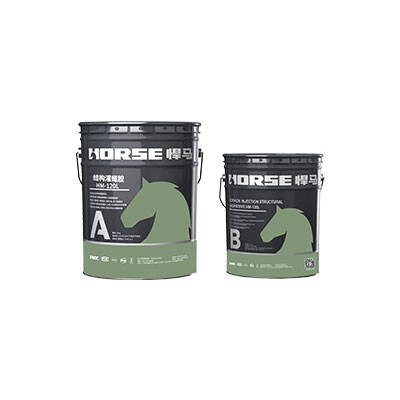
Very strong penetration and low viscosity epoxy crack injection adhesive for repairing concrete crack
